Failure Is
Not an Option
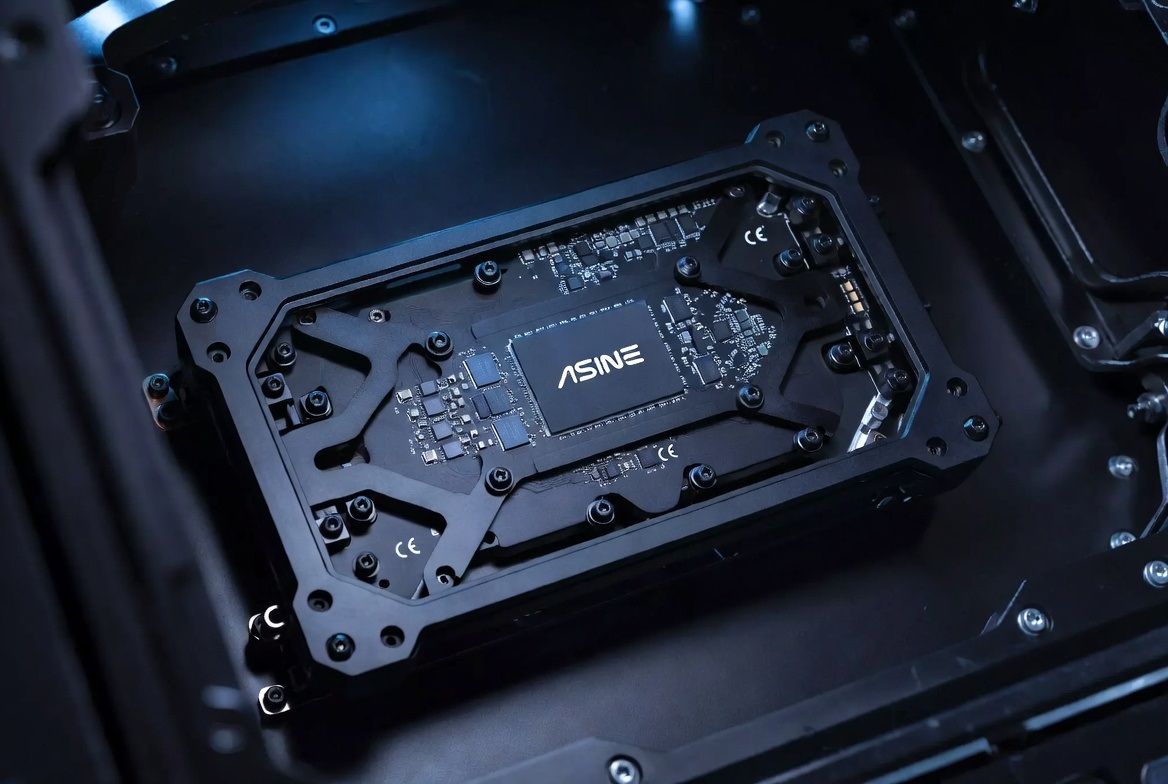
ASINE storage is fielded across the world's most demanding defense, aerospace, space, and industrial programs — from airborne ISR platforms to orbital systems to ground vehicle fleets. Our customers choose ASINE because the programs are too important for anything less.
the Perimeter
Rafael Advanced Defense Systems is one of the region's most sensitive defense technology authorities — developing and fielding systems that operate at the highest levels of national security. The programs ASINE supports for Rafael exist at a classification level where the nature of the engagement is itself restricted. What can be said is this: ASINE is a trusted supplier at the highest tier of Rafael's program hierarchy, and that relationship was built on engineering capability, not proximity.
The Challenge
Rafael's programs operate where storage is not evaluated against a datasheet — it is evaluated against a mission. The environments are extreme, the data is classified, and the consequences of failure are measured in strategic terms. A supplier who cannot operate at that level of technical and security rigor does not get through the door.
The requirements span the full range of what ruggedized storage must deliver: thermal extremes, sustained shock and vibration loads, hardware-enforced data sanitization, and lifecycle governance over programs that run for decades. Everything must be engineered in, not bolted on.
Why ASINE
There are suppliers, and there are partners cleared to be inside the perimeter. ASINE earned that position through engineering performance — ruggedized storage qualified to MIL-STD-810, operating across the full thermal envelope Rafael's programs demand, with hardware-triggered secure erase built into the architecture, not added as a feature.
BOM freeze policy, formal PCN governance, and ten-year minimum availability planning ensure that once ASINE is qualified into a Rafael program, the supply chain does not become the program's vulnerability.

on What Cannot Fail
ASINE's partnership with Elbit Systems spans more than fifteen years. Elbit is one of the world's leading defense electronics companies, developing and fielding systems across airborne, ground, naval, and unmanned platforms in some of the most operationally demanding environments on earth. That is precisely why they came to ASINE — and why they stay.
The Challenge
Elbit builds systems where storage is not a commodity — it is a mission-critical component. Airborne platforms endure continuous shock and vibration across wide thermal envelopes. Ground vehicle systems cycle from arctic cold to desert heat within a single deployment. Unmanned platforms demand extreme miniaturization without any compromise on data integrity or security.
Across all of it, Elbit runs multi-decade programs. A component that disappears from the market mid-program is not an inconvenience — it is a program risk.
The ASINE Solution
ASINE supplies ruggedized flash storage engineered to MIL-STD-810 shock and vibration standards, operating across −40°C to +85°C with select variants extending beyond that envelope. Hardware-triggered secure erase meets the data sanitization requirements of classified program environments.
BOM freeze policy and formal PCN notification with minimum twelve months advance notice eliminates mid-program requalification exposure. Long-term availability commitments of ten years or more align with Elbit's program lifecycle reality.
.webp)
Is Mission Speed
ELTA Systems develops and fields some of the world's most advanced airborne radar, electronic warfare, and intelligence collection systems. The storage challenge at the heart of every ELTA platform is the same: capture, protect, and if necessary destroy mission data at speeds and under environmental conditions that eliminate standard storage from consideration.
The Challenge
ELTA's airborne radar and EW platforms operate in environments that push storage to its limits. Continuous shock and vibration in fixed and rotary-wing aircraft, wide thermal cycling from ground to altitude, and the constant high-speed ingestion of sensor data create requirements that consumer and commercial storage cannot meet.
Why ASINE
ASINE supplies ELTA with ruggedized flash storage engineered for the airborne environment — MIL-STD-810 shock and vibration qualified, operating across −40°C to +85°C, with hardware-triggered secure erase guaranteed in under twelve seconds. No super-capacitors in the power loss protection architecture means higher available capacity without compromising reliability.
Every Level
IAI is one of the world's most sophisticated defense and aerospace organizations — spanning aviation, space, defense communications, ISR platforms, and tactical edge systems across multiple divisions. ASINE storage is qualified and deployed across that organization.
The Challenge
IAI's programs span aviation, space, defense communications, ISR, and tactical edge computing — each with distinct storage requirements. Space applications demand thermal stability and radiation tolerance. ISR platforms require high-speed data capture with hardware-enforced security.
Why ASINE
ASINE provides IAI with military-grade flash storage qualified to MIL-STD-810, operating across −40°C to +85°C with extended variants for space and high-altitude applications including radiation-resistant models qualified to 100,000 feet.
There When
It Counts
RADA Electronic Industries develops and produces tactical radar systems deployed on defense platforms worldwide. Their systems operate in some of the most mechanically and thermally demanding conditions in the defense electronics market — vehicle-mounted, continuously operating, in all climates and terrains.
The Challenge
Tactical radar systems on defense platforms face storage conditions that eliminate standard solutions immediately. Continuous mechanical vibration, thermal cycling, high-speed data ingestion from active radar operation, and the requirement for instant data sanitization in the field — these are not edge cases. They are the baseline operating environment.
Why ASINE
ASINE supplies RADA with military-grade flash storage qualified to MIL-STD-810, rated across −40°C to +85°C with select variants extending to −50°C to +105°C. Hardware-triggered secure erase meets field sanitization requirements. Power loss protection without super-capacitors delivers reliability without capacity compromise.

Demand Decades
of Supply
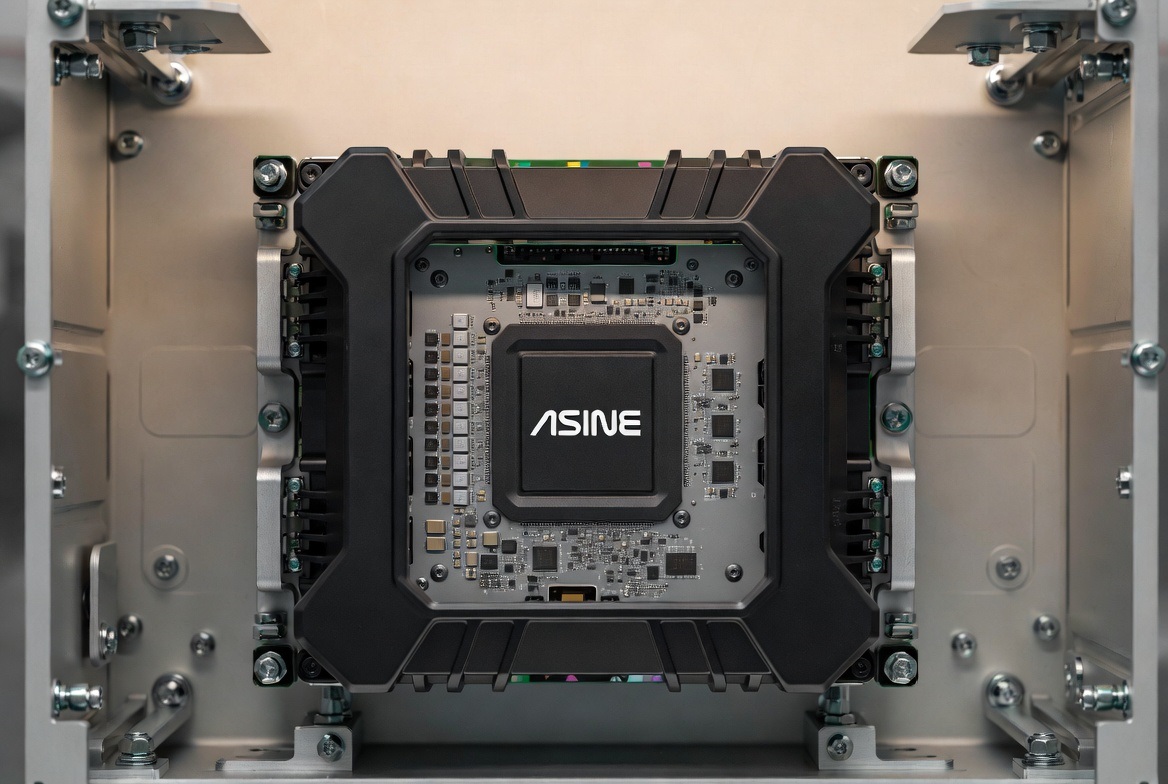
Toshiba's commitment to leading innovation across industrial and infrastructure systems demands components that meet the same standard. The relationship between Toshiba and ASINE is built on a shared understanding of what long-term reliability means in practice — not as a specification, but as an engineering obligation.
The Requirement
Toshiba's industrial and infrastructure programs operate on timescales that place extraordinary demands on component suppliers. Systems deployed in energy infrastructure, industrial automation, and social infrastructure must perform continuously across program lifecycles that extend well beyond the commercial product cycle of most storage components.
Why ASINE
ASINE supplies Toshiba with industrial-grade flash storage meeting the environmental and endurance requirements of Toshiba's program portfolio. BOM freeze policy, twelve-month minimum PCN notification, and ten-year minimum availability planning align directly with Toshiba's program lifecycle reality. ASINE does not assemble in China and does not use active components from China.

Require Long-Term
Partners
Hitachi's vision — Inspire the Next — is built on the premise that today's infrastructure enables tomorrow's possibilities. The storage components inside Hitachi's social and industrial infrastructure systems must perform without interruption, across decades of deployment, in environments that commercial storage was not designed to survive.
The Requirement
Hitachi's social infrastructure programs — spanning railway systems, energy infrastructure, industrial automation, and digital systems — demand storage that operates continuously and predictably across the full service life of the platform.
Why ASINE
ASINE supplies Hitachi with industrial-grade flash storage with MTBF ratings up to 2,000,000 hours in select series. BOM freeze policy, twelve-month minimum PCN notification, and ten-year minimum availability planning. Non-China assembly and active component sourcing supports Hitachi's supply chain audit requirements.

Change Everything
Run on Components
That Never Do
Mitsubishi Electric is one of ASINE's longest-standing and most important customers. Across factory automation, power systems, satellite communications, and industrial electronics, Mitsubishi Electric demands storage that matches its own engineering standards — industrial-grade, lifecycle-governed, and built to outlast the programs it serves.
The Requirement
Mitsubishi Electric's systems span satellite communications, power infrastructure, factory automation, and building systems. In satellite applications, storage must survive the radiation and thermal vacuum of the orbital environment. In industrial automation, it must maintain deterministic behavior under continuous write workloads and power interruption conditions.
Why ASINE
ASINE supplies Mitsubishi Electric across multiple product families and program types. Products operate across −40°C to +85°C with extended variants for space and high-altitude applications. BOM freeze policy, twelve-month minimum PCN notification, ten-year availability planning, and non-China assembly meet Mitsubishi Electric's supply chain audit requirements.
in Programs,
Not Transactions
Mitsubishi's engineering organizations operate across heavy industries, aerospace systems, shipbuilding, and industrial machinery. The relationship with ASINE spans multiple programs and product families — built on consistent performance, supply chain reliability, and the kind of engineering discipline that long-lifecycle programs require.
The Requirement
Mitsubishi's industrial and systems programs place storage requirements spanning the full range of ASINE's engineering capability — from the thermal and shock requirements of heavy industrial environments to the endurance demands of continuous-operation systems.
Why ASINE
ASINE supplies Mitsubishi across multiple product families — 2.5" SATA, M.2 NVMe, U.2, XMC, and 3U VPX form factors. BOM freeze policy, twelve-month minimum PCN notification, ten-year availability planning, and non-China assembly meet Mitsubishi's supply chain audit and compliance requirements.

to the Race Track
to the Future
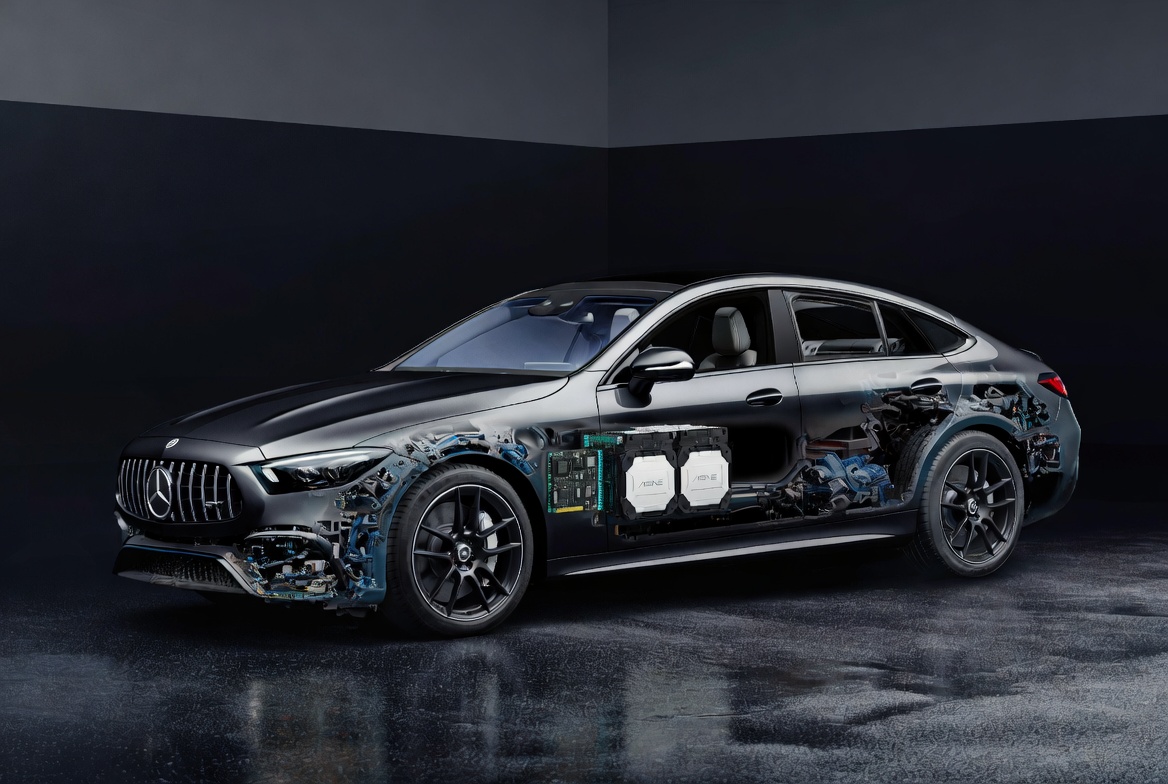
The Mercedes-Benz relationship with ASINE spans commercial vehicle platforms, Formula One data infrastructure, and an active engagement around the future of software-defined mobility. ASINE was selected as one of eight finalists in the Mercedes-Benz car2space Challenge 2026 — the INNOspace Masters program connecting space-heritage technology to the future of the Mercedes EQ fleet and MB.OS platform.
Commercial Vehicle Platforms
Mercedes-Benz commercial vehicles — including the Zetros, Arocs, and Unimog — operate globally across arctic, desert, high-altitude, and severe off-road conditions. ASINE supplies ruggedized flash storage operating across −40°C to +85°C, qualified to 1,500G shock and 16.3 GRMS vibration, with hardware power loss protection.
car2space — From Orbit to Road
ASINE was selected as one of eight finalists in the Mercedes-Benz car2space Challenge 2026, run through the INNOspace Masters program with DLR and the European Space Agency. The submission proposed space-heritage storage and Storage Class Memory architecture as the hardware foundation for MB.OS, with Formula One as the validation environment. The Challenge Finals run through June 2026 with the Final Event in Berlin, November 2026.

Meets the Limits
of Storage
VAST Data builds storage infrastructure for AI and analytics at scale. The endurance, latency, and integrity requirements of AI workloads push storage to limits that commercial-grade hardware cannot reliably sustain. ASINE supplies VAST Data through channel partners with storage engineered for exactly those demands.
The Requirement
AI workloads impose storage demands that most flash hardware is not built to sustain. Training runs generate continuous high-throughput sequential writes over extended periods. Inference at scale requires low, predictable read latency under simultaneous multi-tenant load.
Why ASINE
ASINE's engineering baseline was built for environments where sustained performance under stress is not optional. High-endurance pSLC and MLC NAND configurations, hardware power loss protection, and NVMe Gen4 in M.2 and U.2 form factors give the platform a storage foundation engineered for the workload.
The following organizations represent active ASINE engineering engagements across commercial aviation, defense, and space infrastructure — program details subject to NDA.

& Scientific
Computing
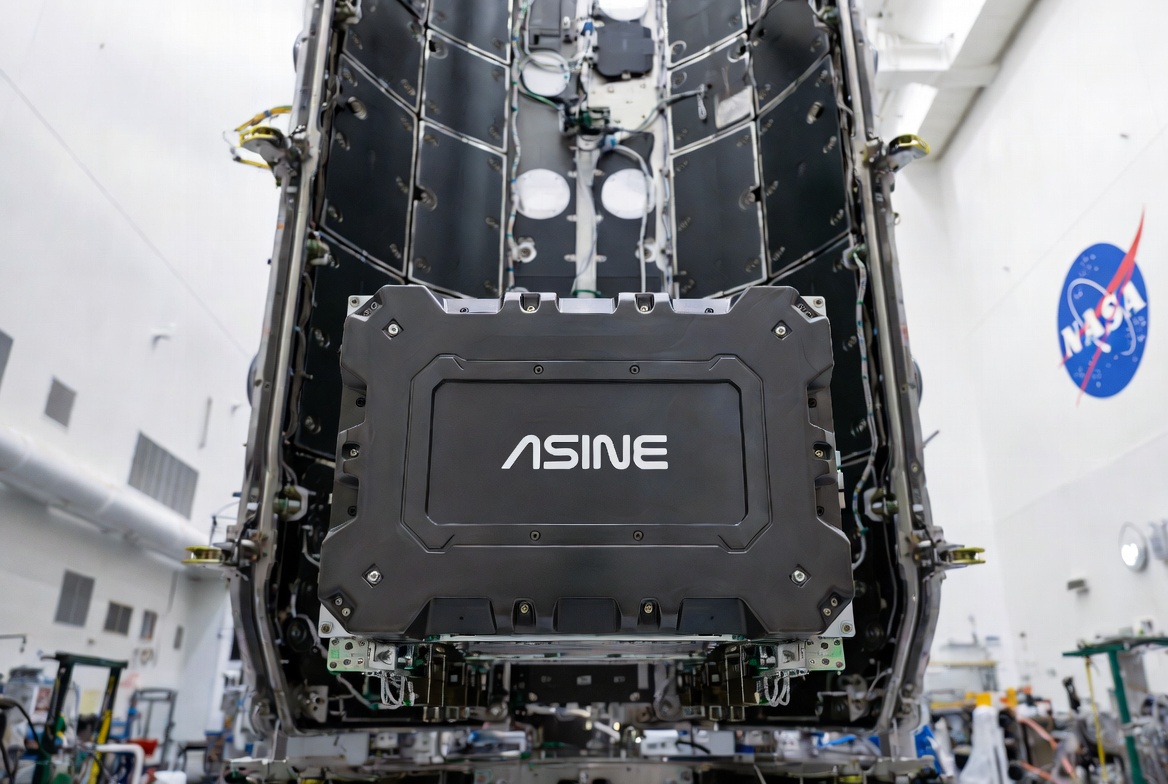
NASA integrates high-reliability SSDs and Storage Class Memory solutions across its crewed and uncrewed missions, where data integrity, radiation tolerance, and long-term operation in extreme environments are essential.
Key Applications
On-Orbit Edge Computing — Advanced SSDs enable real-time data processing aboard the International Space Station and future lunar and orbital platforms.
Deep Space Exploration — Storage Class Memory and radiation-hardened SSDs support autonomous operations on Mars rovers, lunar landers, and deep-space probes.
Scientific Instruments & Observatories — High-endurance SSDs store massive volumes of telemetry, imagery, and scientific data from Earth observation satellites and space telescopes.
Ground-Based HPC — NASA's supercomputing centers use high-performance SSD tiers to support large-scale simulations in climate modeling, aeronautics, and astrophysics.
Why ASINE
ASINE provides the silent backbone that helps NASA turn vast amounts of raw space data into actionable knowledge — whether in orbit, on the lunar surface, or during future crewed missions to Mars.
Every Flight
On-Spec
Airbus programs span commercial aviation, defense, and space — each with storage requirements defined by the most rigorous qualification regimes in the world. ASINE is fielded in active Airbus programs.
The Requirement
Airbus programs operate under qualification regimes that define the ceiling of what storage must deliver. Commercial aviation demands DO-160 environmental qualification, with storage embedded in flight management, cabin management, and avionics systems operating continuously across altitude, temperature, and vibration profiles.
Why ASINE
ASINE's qualification framework was built for exactly the program profile Airbus operates. BOM freeze policy eliminates the mid-program component revision risk that triggers requalification. Twelve-month minimum PCN notification and ten-year availability planning give Airbus program managers the supply continuity their timelines require.

the Programs That
Cannot Be Named
Boeing's defense and space divisions operate programs where storage qualification is measured in decades, not product generations. ASINE's lifecycle governance and engineering partnership model is built for exactly that reality.
The Requirement
Boeing defense and space programs set the standard for what long-lifecycle qualification means in practice. Platform programs operate on schedules where the storage component qualified at program launch must still be available, at spec, fifteen or twenty years later. That requirement eliminates the entire commercial storage market at the outset.
Why ASINE
BOM freeze policy means the component Boeing qualifies is the component Boeing receives — unchanged — for the life of the program. Twelve-month minimum PCN notification and ten-year availability planning are engineering obligations backed by ASINE's manufacturing and inventory governance framework.

Where No One
Can Fix It
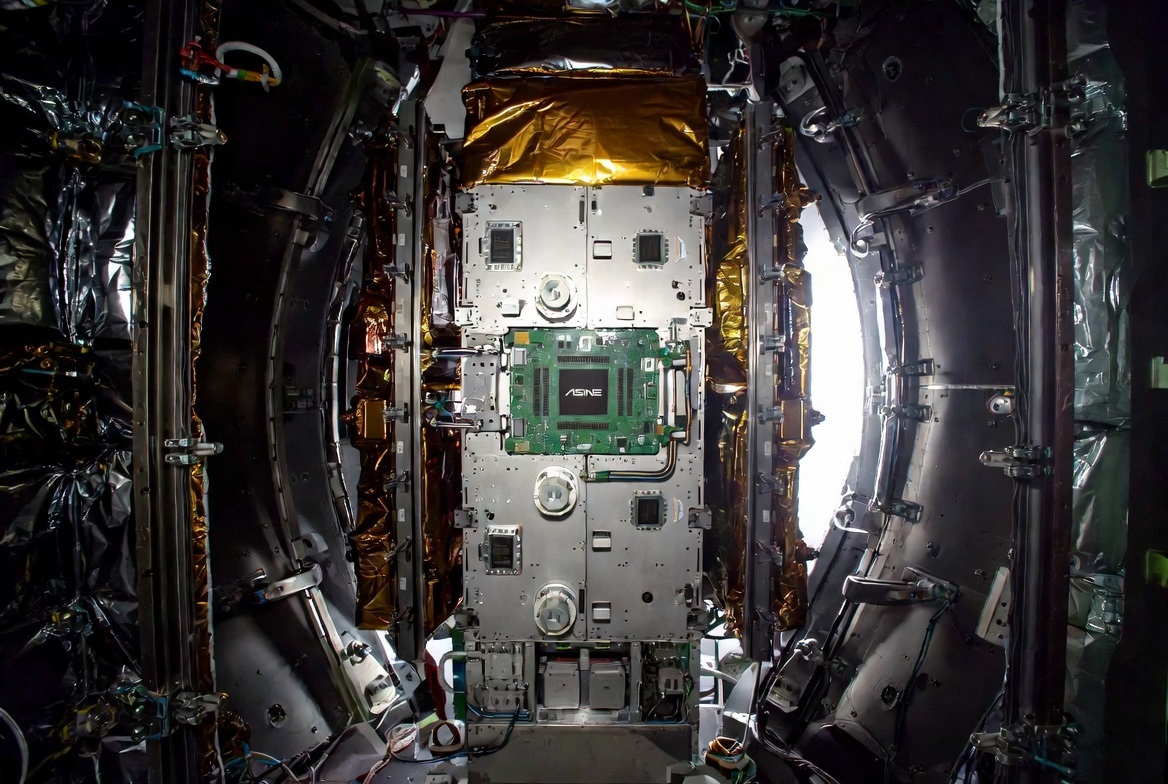
Ramon Space builds radiation-hardened computing platforms for orbital and deep-space missions — systems that have flown on more than fifty space missions. The storage challenge in space is absolute: once the platform launches, there is no maintenance window, no field replacement, no second chance.
The Challenge
Space storage requirements eliminate every standard solution before the conversation begins. Radiation from cosmic rays causes bit flips, single event upsets, and total ionizing dose degradation in commercial NAND flash. Thermal vacuum cycling stresses solder joints, connectors, and die attach. Launch shock and vibration loads are severe and non-negotiable.
Why ASINE
ASINE supplies Ramon Space with storage solutions engineered for the space environment — radiation-tolerant variants qualified for LEO and MEO orbital regimes, operating across extreme thermal envelopes, with outgassing-compliant materials and vacuum-compatible construction.
Second Is Live
Calrec Audio manufactures professional broadcast mixing consoles used in live television production at the world's most demanding broadcast facilities. Their systems operate continuously, under sustained write workloads, with power interruptions that are not exceptions — they are a routine part of the operating environment. ASINE is in active evaluation for Calrec's next-generation platform storage specification.
The Challenge
Calrec's broadcast systems create a storage environment that exposes the failure modes of standard commercial SSDs with precision. The workload is dominated by small block random writes. Every power-down cycle is an abnormal power-loss event. The specification: 1,000 TBW at 4K random writes, hardware-backed PLP, pSLC flash mode, 3,000 MB/s read performance, M.2 2280, 85°C operating temperature.
Why ASINE
ASINE mapped the three failure modes Calrec identified to specific architectural solutions: pSLC mode for endurance and timing stability, hardware-backed PLP with internal capacitor bank, and Gen4 NVMe performance at the required form factor. ASINE's pSLC Enterprise Option V delivers 1,000 TBW at 160GB; the 480GB Gen4 Pro Performance family delivers 950 TBW as the high-capacity path.
Through Trusted Partners
ASINE products are available through an expanding network of authorized distribution partners across Europe and North America. These relationships extend ASINE's technical and commercial reach into markets where local expertise and supply chain support matter.
Specialist distributor for embedded computing, industrial, and defense electronics across the DACH region and Central Eastern Europe.

Leading electronic components distributor serving industrial and defense OEMs across Japan and the Asia-Pacific region.
Value-added distributor for embedded and industrial electronics with deep application engineering support for defense and aerospace customers.

Pan-European distributor with active UK and Ireland coverage, supporting industrial and professional customers including the broadcast and professional audio sector.

Regional distributor and systems integrator supporting industrial, defense, and technology customers across the Middle East with ASINE products and application engineering.

Long-term Canadian distribution partner active since 2012, serving defense and industrial OEMs across North America with ASINE embedded storage solutions.
Your Program Has Requirements. We Have Solutions.
Whether you are qualifying storage for a new platform, managing component EOL risk on a long-life program, or need an engineering partner who will still be there in year fifteen — talk to ASINE.
the Programs Were
Too Important
for the Alternative.
From classified defense programs to orbital deployments to the infrastructure that powers AI at scale — these organizations qualified ASINE, integrated ASINE, and kept ASINE. That record is the only credential that matters.
Talk to an EngineerFailure Is
Not an Option
ASINE storage is fielded across the world's most demanding defense, aerospace, space, and industrial programs — from airborne ISR platforms to orbital systems to ground vehicle fleets. Our customers choose ASINE because the programs are too important for anything less.
the Perimeter
Rafael Advanced Defense Systems is one of the region's most sensitive defense technology authorities — developing and fielding systems that operate at the highest levels of national security. The programs ASINE supports for Rafael exist at a classification level where the nature of the engagement is itself restricted. What can be said is this: ASINE is a trusted supplier at the highest tier of Rafael's program hierarchy, and that relationship was built on engineering capability, not proximity.
The Challenge
Rafael's programs operate where storage is not evaluated against a datasheet — it is evaluated against a mission. The environments are extreme, the data is classified, and the consequences of failure are measured in strategic terms. A supplier who cannot operate at that level of technical and security rigor does not get through the door.
The requirements span the full range of what ruggedized storage must deliver: thermal extremes, sustained shock and vibration loads, hardware-enforced data sanitization, and lifecycle governance over programs that run for decades. Everything must be engineered in, not bolted on.
Why ASINE
There are suppliers, and there are partners cleared to be inside the perimeter. ASINE earned that position through engineering performance — ruggedized storage qualified to MIL-STD-810, operating across the full thermal envelope Rafael's programs demand, with hardware-triggered secure erase built into the architecture, not added as a feature.
BOM freeze policy, formal PCN governance, and ten-year minimum availability planning ensure that once ASINE is qualified into a Rafael program, the supply chain does not become the program's vulnerability.
on What Cannot Fail
ASINE's partnership with Elbit Systems spans more than fifteen years. Elbit is one of the world's leading defense electronics companies, developing and fielding systems across airborne, ground, naval, and unmanned platforms in some of the most operationally demanding environments on earth. That is precisely why they came to ASINE — and why they stay.
The Challenge
Elbit builds systems where storage is not a commodity — it is a mission-critical component. Airborne platforms endure continuous shock and vibration across wide thermal envelopes. Ground vehicle systems cycle from arctic cold to desert heat within a single deployment. Unmanned platforms demand extreme miniaturization without any compromise on data integrity or security.
Across all of it, Elbit runs multi-decade programs. A component that disappears from the market mid-program is not an inconvenience — it is a program risk.
The ASINE Solution
ASINE supplies ruggedized flash storage engineered to MIL-STD-810 shock and vibration standards, operating across −40°C to +85°C with select variants extending beyond that envelope. Hardware-triggered secure erase meets the data sanitization requirements of classified program environments.
BOM freeze policy and formal PCN notification with minimum twelve months advance notice eliminates mid-program requalification exposure. Long-term availability commitments of ten years or more align with Elbit's program lifecycle reality.
Is Mission Speed
ELTA Systems develops and fields some of the world's most advanced airborne radar, electronic warfare, and intelligence collection systems. The storage challenge at the heart of every ELTA platform is the same: capture, protect, and if necessary destroy mission data at speeds and under environmental conditions that eliminate standard storage from consideration.
The Challenge
ELTA's airborne radar and EW platforms operate in environments that push storage to its limits. Continuous shock and vibration in fixed and rotary-wing aircraft, wide thermal cycling from ground to altitude, and the constant high-speed ingestion of sensor data create requirements that consumer and commercial storage cannot meet.
Why ASINE
ASINE supplies ELTA with ruggedized flash storage engineered for the airborne environment — MIL-STD-810 shock and vibration qualified, operating across −40°C to +85°C, with hardware-triggered secure erase guaranteed in under twelve seconds. No super-capacitors in the power loss protection architecture means higher available capacity without compromising reliability.
Every Level
IAI is one of the world's most sophisticated defense and aerospace organizations — spanning aviation, space, defense communications, ISR platforms, and tactical edge systems across multiple divisions. ASINE storage is qualified and deployed across that organization.
The Challenge
IAI's programs span aviation, space, defense communications, ISR, and tactical edge computing — each with distinct storage requirements. Space applications demand thermal stability and radiation tolerance. ISR platforms require high-speed data capture with hardware-enforced security.
Why ASINE
ASINE provides IAI with military-grade flash storage qualified to MIL-STD-810, operating across −40°C to +85°C with extended variants for space and high-altitude applications including radiation-resistant models qualified to 100,000 feet.
There When
It Counts
RADA Electronic Industries develops and produces tactical radar systems deployed on defense platforms worldwide. Their systems operate in some of the most mechanically and thermally demanding conditions in the defense electronics market — vehicle-mounted, continuously operating, in all climates and terrains.
The Challenge
Tactical radar systems on defense platforms face storage conditions that eliminate standard solutions immediately. Continuous mechanical vibration, thermal cycling, high-speed data ingestion from active radar operation, and the requirement for instant data sanitization in the field — these are not edge cases. They are the baseline operating environment.
Why ASINE
ASINE supplies RADA with military-grade flash storage qualified to MIL-STD-810, rated across −40°C to +85°C with select variants extending to −50°C to +105°C. Hardware-triggered secure erase meets field sanitization requirements. Power loss protection without super-capacitors delivers reliability without capacity compromise.
Demand Decades
of Supply
Toshiba's commitment to leading innovation across industrial and infrastructure systems demands components that meet the same standard. The relationship between Toshiba and ASINE is built on a shared understanding of what long-term reliability means in practice — not as a specification, but as an engineering obligation.
The Requirement
Toshiba's industrial and infrastructure programs operate on timescales that place extraordinary demands on component suppliers. Systems deployed in energy infrastructure, industrial automation, and social infrastructure must perform continuously across program lifecycles that extend well beyond the commercial product cycle of most storage components.
Why ASINE
ASINE supplies Toshiba with industrial-grade flash storage meeting the environmental and endurance requirements of Toshiba's program portfolio. BOM freeze policy, twelve-month minimum PCN notification, and ten-year minimum availability planning align directly with Toshiba's program lifecycle reality. ASINE does not assemble in China and does not use active components from China.
Require Long-Term
Partners
Hitachi's vision — Inspire the Next — is built on the premise that today's infrastructure enables tomorrow's possibilities. The storage components inside Hitachi's social and industrial infrastructure systems must perform without interruption, across decades of deployment, in environments that commercial storage was not designed to survive.
The Requirement
Hitachi's social infrastructure programs — spanning railway systems, energy infrastructure, industrial automation, and digital systems — demand storage that operates continuously and predictably across the full service life of the platform.
Why ASINE
ASINE supplies Hitachi with industrial-grade flash storage with MTBF ratings up to 2,000,000 hours in select series. BOM freeze policy, twelve-month minimum PCN notification, and ten-year minimum availability planning. Non-China assembly and active component sourcing supports Hitachi's supply chain audit requirements.
Change Everything
Run on Components
That Never Do
Mitsubishi Electric is one of ASINE's longest-standing and most important customers. Across factory automation, power systems, satellite communications, and industrial electronics, Mitsubishi Electric demands storage that matches its own engineering standards — industrial-grade, lifecycle-governed, and built to outlast the programs it serves.
The Requirement
Mitsubishi Electric's systems span satellite communications, power infrastructure, factory automation, and building systems. In satellite applications, storage must survive the radiation and thermal vacuum of the orbital environment. In industrial automation, it must maintain deterministic behavior under continuous write workloads and power interruption conditions.
Why ASINE
ASINE supplies Mitsubishi Electric across multiple product families and program types. Products operate across −40°C to +85°C with extended variants for space and high-altitude applications. BOM freeze policy, twelve-month minimum PCN notification, ten-year availability planning, and non-China assembly meet Mitsubishi Electric's supply chain audit requirements.
in Programs,
Not Transactions
Mitsubishi's engineering organizations operate across heavy industries, aerospace systems, shipbuilding, and industrial machinery. The relationship with ASINE spans multiple programs and product families — built on consistent performance, supply chain reliability, and the kind of engineering discipline that long-lifecycle programs require.
The Requirement
Mitsubishi's industrial and systems programs place storage requirements spanning the full range of ASINE's engineering capability — from the thermal and shock requirements of heavy industrial environments to the endurance demands of continuous-operation systems.
Why ASINE
ASINE supplies Mitsubishi across multiple product families — 2.5" SATA, M.2 NVMe, U.2, XMC, and 3U VPX form factors. BOM freeze policy, twelve-month minimum PCN notification, ten-year availability planning, and non-China assembly meet Mitsubishi's supply chain audit and compliance requirements.
to the Race Track
to the Future
The Mercedes-Benz relationship with ASINE spans commercial vehicle platforms, Formula One data infrastructure, and an active engagement around the future of software-defined mobility. ASINE was selected as one of eight finalists in the Mercedes-Benz car2space Challenge 2026 — the INNOspace Masters program connecting space-heritage technology to the future of the Mercedes EQ fleet and MB.OS platform.
Commercial Vehicle Platforms
Mercedes-Benz commercial vehicles — including the Zetros, Arocs, and Unimog — operate globally across arctic, desert, high-altitude, and severe off-road conditions. ASINE supplies ruggedized flash storage operating across −40°C to +85°C, qualified to 1,500G shock and 16.3 GRMS vibration, with hardware power loss protection.
car2space — From Orbit to Road
ASINE was selected as one of eight finalists in the Mercedes-Benz car2space Challenge 2026, run through the INNOspace Masters program with DLR and the European Space Agency. The submission proposed space-heritage storage and Storage Class Memory architecture as the hardware foundation for MB.OS, with Formula One as the validation environment. The Challenge Finals run through June 2026 with the Final Event in Berlin, November 2026.
Meets the Limits
of Storage
VAST Data builds storage infrastructure for AI and analytics at scale. The endurance, latency, and integrity requirements of AI workloads push storage to limits that commercial-grade hardware cannot reliably sustain. ASINE supplies VAST Data through channel partners with storage engineered for exactly those demands.
The Requirement
AI workloads impose storage demands that most flash hardware is not built to sustain. Training runs generate continuous high-throughput sequential writes over extended periods. Inference at scale requires low, predictable read latency under simultaneous multi-tenant load.
Why ASINE
ASINE's engineering baseline was built for environments where sustained performance under stress is not optional. High-endurance pSLC and MLC NAND configurations, hardware power loss protection, and NVMe Gen4 in M.2 and U.2 form factors give the platform a storage foundation engineered for the workload.
The following organizations represent active ASINE engineering engagements across commercial aviation, defense, and space infrastructure — program details subject to NDA.
& Scientific
Computing
NASA integrates high-reliability SSDs and Storage Class Memory solutions across its crewed and uncrewed missions, where data integrity, radiation tolerance, and long-term operation in extreme environments are essential.
Key Applications
On-Orbit Edge Computing — Advanced SSDs enable real-time data processing aboard the International Space Station and future lunar and orbital platforms.
Deep Space Exploration — Storage Class Memory and radiation-hardened SSDs support autonomous operations on Mars rovers, lunar landers, and deep-space probes.
Scientific Instruments & Observatories — High-endurance SSDs store massive volumes of telemetry, imagery, and scientific data from Earth observation satellites and space telescopes.
Ground-Based HPC — NASA's supercomputing centers use high-performance SSD tiers to support large-scale simulations in climate modeling, aeronautics, and astrophysics.
Why ASINE
ASINE provides the silent backbone that helps NASA turn vast amounts of raw space data into actionable knowledge — whether in orbit, on the lunar surface, or during future crewed missions to Mars.
Every Flight
On-Spec
Airbus programs span commercial aviation, defense, and space — each with storage requirements defined by the most rigorous qualification regimes in the world. ASINE is fielded in active Airbus programs.
The Requirement
Airbus programs operate under qualification regimes that define the ceiling of what storage must deliver. Commercial aviation demands DO-160 environmental qualification, with storage embedded in flight management, cabin management, and avionics systems operating continuously across altitude, temperature, and vibration profiles.
Why ASINE
ASINE's qualification framework was built for exactly the program profile Airbus operates. BOM freeze policy eliminates the mid-program component revision risk that triggers requalification. Twelve-month minimum PCN notification and ten-year availability planning give Airbus program managers the supply continuity their timelines require.
the Programs That
Cannot Be Named
Boeing's defense and space divisions operate programs where storage qualification is measured in decades, not product generations. ASINE's lifecycle governance and engineering partnership model is built for exactly that reality.
The Requirement
Boeing defense and space programs set the standard for what long-lifecycle qualification means in practice. Platform programs operate on schedules where the storage component qualified at program launch must still be available, at spec, fifteen or twenty years later. That requirement eliminates the entire commercial storage market at the outset.
Why ASINE
BOM freeze policy means the component Boeing qualifies is the component Boeing receives — unchanged — for the life of the program. Twelve-month minimum PCN notification and ten-year availability planning are engineering obligations backed by ASINE's manufacturing and inventory governance framework.
Where No One
Can Fix It
Ramon Space builds radiation-hardened computing platforms for orbital and deep-space missions — systems that have flown on more than fifty space missions. The storage challenge in space is absolute: once the platform launches, there is no maintenance window, no field replacement, no second chance.
The Challenge
Space storage requirements eliminate every standard solution before the conversation begins. Radiation from cosmic rays causes bit flips, single event upsets, and total ionizing dose degradation in commercial NAND flash. Thermal vacuum cycling stresses solder joints, connectors, and die attach. Launch shock and vibration loads are severe and non-negotiable.
Why ASINE
ASINE supplies Ramon Space with storage solutions engineered for the space environment — radiation-tolerant variants qualified for LEO and MEO orbital regimes, operating across extreme thermal envelopes, with outgassing-compliant materials and vacuum-compatible construction.
Second Is Live
Calrec Audio manufactures professional broadcast mixing consoles used in live television production at the world's most demanding broadcast facilities. Their systems operate continuously, under sustained write workloads, with power interruptions that are not exceptions — they are a routine part of the operating environment. ASINE is in active evaluation for Calrec's next-generation platform storage specification.
The Challenge
Calrec's broadcast systems create a storage environment that exposes the failure modes of standard commercial SSDs with precision. The workload is dominated by small block random writes. Every power-down cycle is an abnormal power-loss event. The specification: 1,000 TBW at 4K random writes, hardware-backed PLP, pSLC flash mode, 3,000 MB/s read performance, M.2 2280, 85°C operating temperature.
Why ASINE
ASINE mapped the three failure modes Calrec identified to specific architectural solutions: pSLC mode for endurance and timing stability, hardware-backed PLP with internal capacitor bank, and Gen4 NVMe performance at the required form factor. ASINE's pSLC Enterprise Option V delivers 1,000 TBW at 160GB; the 480GB Gen4 Pro Performance family delivers 950 TBW as the high-capacity path.
Through Trusted Partners
ASINE products are available through an expanding network of authorized distribution partners across Europe and North America. These relationships extend ASINE's technical and commercial reach into markets where local expertise and supply chain support matter.
Specialist distributor for embedded computing, industrial, and defense electronics across the DACH region and Central Eastern Europe.
Leading electronic components distributor serving industrial and defense OEMs across Japan and the Asia-Pacific region.
Value-added distributor for embedded and industrial electronics with deep application engineering support for defense and aerospace customers.
Pan-European distributor with active UK and Ireland coverage, supporting industrial and professional customers including the broadcast and professional audio sector.
Regional distributor and systems integrator supporting industrial, defense, and technology customers across the Middle East with ASINE products and application engineering.
Long-term Canadian distribution partner active since 2012, serving defense and industrial OEMs across North America with ASINE embedded storage solutions.
Your Program Has Requirements. We Have Solutions.
Whether you are qualifying storage for a new platform, managing component EOL risk on a long-life program, or need an engineering partner who will still be there in year fifteen — talk to ASINE.
the Programs Were
Too Important
for the Alternative.
From classified defense programs to orbital deployments to the infrastructure that powers AI at scale — these organizations qualified ASINE, integrated ASINE, and kept ASINE. That record is the only credential that matters.
Talk to an Engineer